Vault Architecture
Multi Asset Vault
V2 multi-asset vaults with basket deposits, a single reference asset, and the two institutional custody and execution models.
Unlike V1 vaults, V2 allows for multi-deposit assets, providing Curators with greater flexibility.
- Asset Model: Users deposit multiple ERC-20 assets and mint an ERC-20 receipt token. Withdrawals from the vault are processed to the single reference asset of the vault. (e.g. A vault accepts both USDC and USDT deposits but the reference asset is set to USDC. All redemptions are processed in USDC.)
- Baskets: Curators can define a basket of accepted assets (e.g., USDC, USDT, DAI) that mint a single, unified share token.
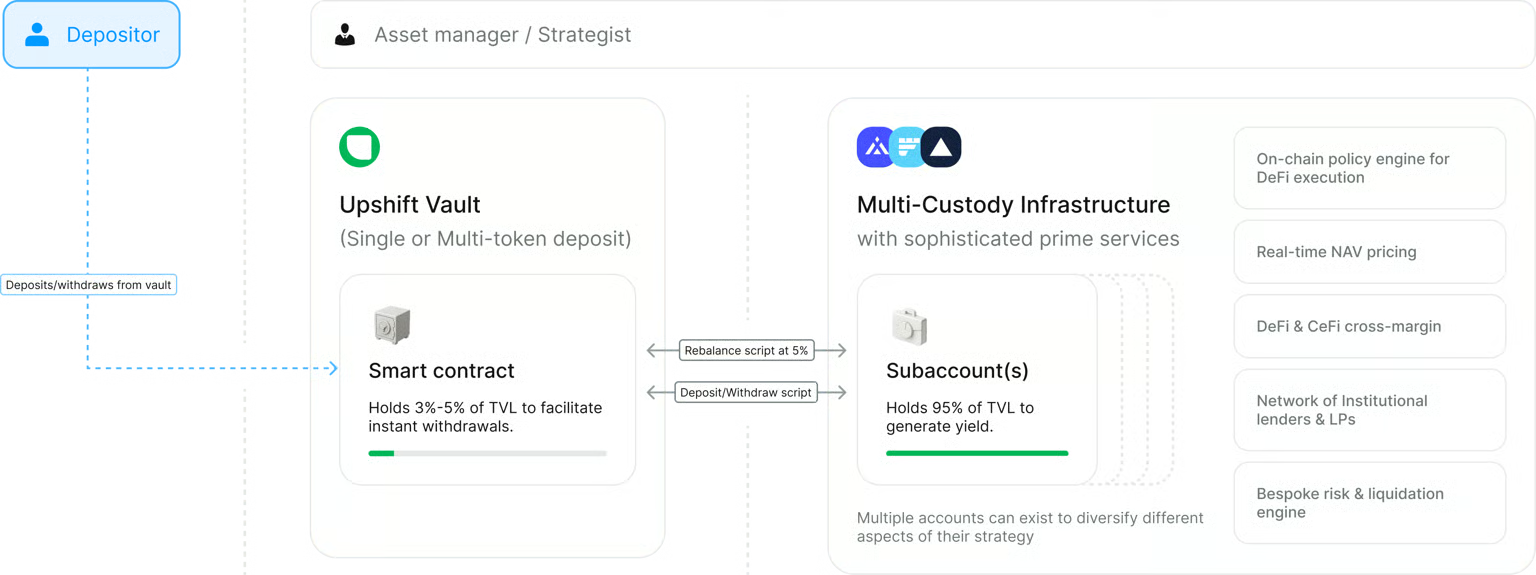
When architecting a V2 vault, the most critical design decision for partners and strategists is the Custody & Execution Model. This choice determines how assets are secured, how strategies are executed, and how the vault's Net Asset Value (NAV) is reported.
Upshift provides two primary institutional paths: the Upshift Subaccount (Smart Contract Wallet) and the Fordefi (MPC) Solution.
Upshift Vault Custody Models
- Upshift Subaccount:
- Deployed by Upshift's institutional infrastructure layer
- Owned by the Vault
- Strategist given trader role
- Trader role allows Strategist to execute strategy; interact with DeFi protocols.
- Subject to permissioned security scheme controlling whitelisting of integrations
- Protocol and token integrations include price feeds to capture value of positions (spot), or value of positions on DeFi protocols.
- Integrations mean Upshift can calculate NAV of positions.
- Assets cannot be sent to external addresses.
- Partners control whitelisting of protocols and tokens (via Upshift).
- Execution of trades via swap module
- Swap module only allows trades between whitelisted tokens.
- Tokens cannot be sent to an external address.
- Bridge module to allow cross-chain strategies, which allows the strategist to bridge assets to subaccounts if the subaccount is deployed on other chains.
- Supports LayerZero (Stargate), and Chainlink CCIP bridging standard. Bridge module prevents funds being sent to external addresses.
- Upshift can calculate the mark to market for options (OTC or Deribit).
- Upshift can capture CeFi perp position value via APIs.
- Fordefi (MPC):
- Upshift can provide access to Fordefi through a shared workspace.
- Transaction policy to control the contract, and token approvals.
- Strategist submits transaction policy requests; the Upshift team, and third-party (protocol or chain partner) if applicable are required to approve changes to the transaction policy.
- Strategist calculates NAV. An operator address is set up within the shared workspace. The Strategist is responsible to propose NAV updates, which is then validated by the Upshift pricing engine.
The on-chain implementation contract on Ethereum is deployed at 0x4eac314be8fec32bfe8f7189040b64e050e801ab.