Architecture
The components of the Atomic Redemption Vault and how the vault contract, yield strategies, instant settlement module, and risk controls fit together.
The vault sits between the party requesting redemption and the yield strategies that hold the bulk of the capital. An instant-settlement module maintains an immediately accessible reserve, and risk controls bound every settlement.
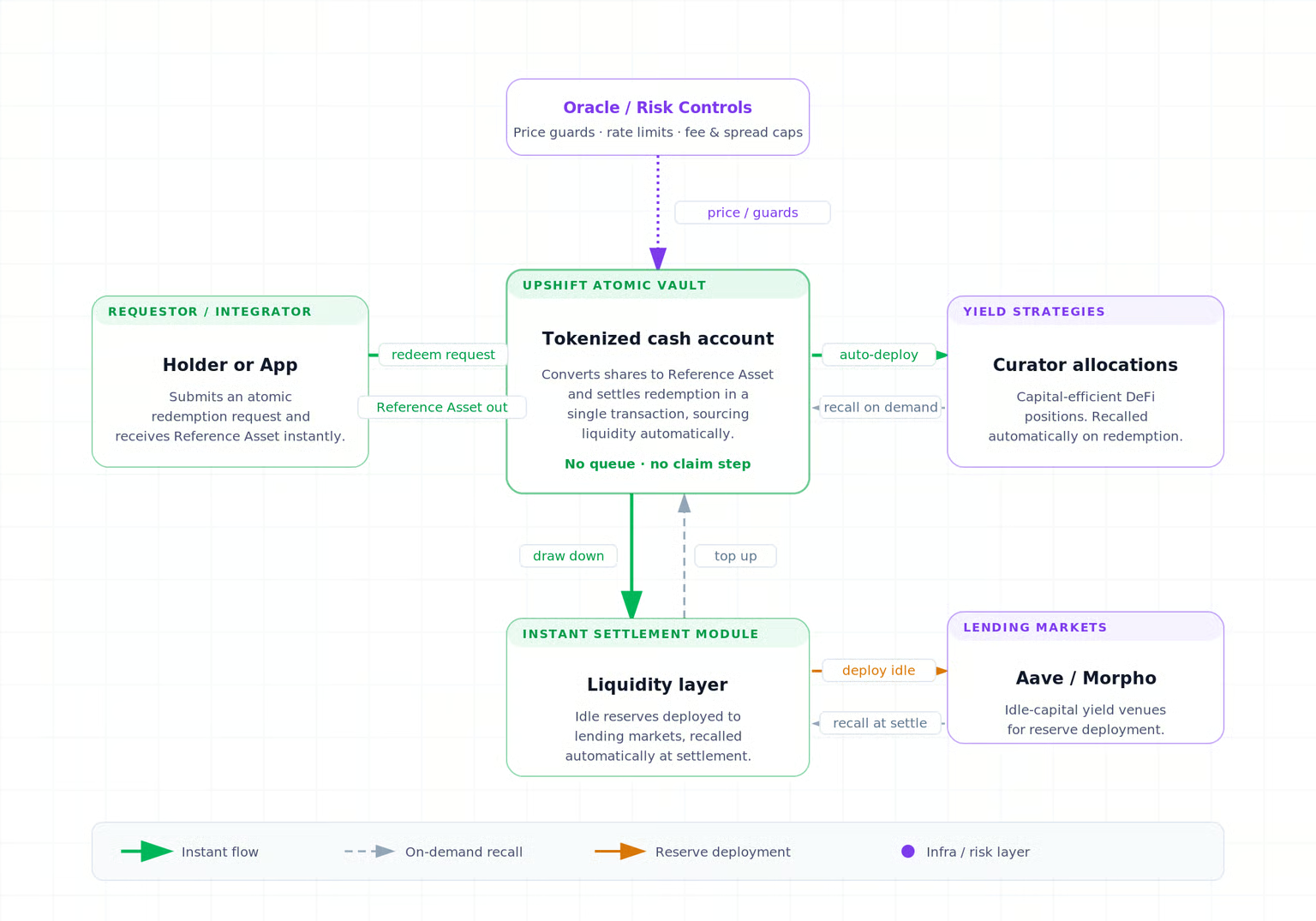
Requestor / Integrator
The holder or application that submits an atomic redemption request and receives the reference asset in the same transaction.
This is deliberately generic: it can be an end user redeeming directly, a payments integrator settling a transaction, or any contract that needs instant liquidity on demand.
Atomic Vault Contract
The tokenized cash account. It holds the share-pricing logic, converts shares to reference assets against current NAV, and orchestrates the liquidity recall and payout atomically.
Yield Strategies
Curator-managed allocations that hold the majority of vault capital in capital-efficient positions. Capital is deployed automatically when idle and recalled automatically when a redemption needs it.
Instant Settlement Module
A liquidity layer that keeps reserves in highly liquid lending markets (Aave and Morpho) where they can be withdrawn synchronously within the settlement transaction. The module is drawn down to fund settlement and topped back up when surplus liquidity returns.
Oracle / Risk Controls
Price feeds and guardrails (oracle price guards, per-transaction rate limits, redemption fee caps, and spread bounds) that bound every settlement and protect the vault under high-velocity redemption flow.
The on-chain implementation contract on Ethereum is at 0x4eac314be8fec32bfe8f7189040b64e050e801ab.
Atomic Redemption Vault
An ERC-4626 vault with an instant-settlement module that settles redemptions atomically in a single transaction, with no withdrawal queue or pre-funded buffer.
How It Works
The deposit flow, the single-transaction atomic redemption flow, and the automated liquidity management that keeps the working reserve funded.